An FLP can save tax in a family business succession

One of the biggest concerns for family business owners is succession planning — transferring ownership and control of the company to the next generation. Often, the best time tax-wise to start transferring ownership is long before the owner is ready to give up control of the business.
A family limited partnership (FLP) can help owners enjoy the tax benefits of gradually transferring ownership yet allow them to retain control of the business.

How it works

To establish an FLP, you transfer your ownership interests to a partnership in exchange for both general and limited partnership interests. You then transfer limited partnership interests to your children.

You retain the general partnership interest, which may be as little as 1% of the assets. But as general partner, you can still run day-to-day operations and make business decisions.

Tax benefits

As you transfer the FLP interests, their value is removed from your taxable estate. What’s more, the future business income and asset appreciation associated with those interests move to the next generation.

Because your children hold limited partnership interests, they have no control over the FLP, and thus no control over the business. They also can’t sell their interests without your consent or force the FLP’s liquidation.

The lack of control and lack of an outside market for the FLP interests generally mean the interests can be valued at a discount — so greater portions of the business can be transferred before triggering gift tax. For example, if the discount is 25%, in 2018 you could gift an FLP interest equal to as much as $20,000 tax-free because the discounted value wouldn’t exceed the $15,000 annual gift tax exclusion.

To transfer interests in excess of the annual exclusion, you can apply your lifetime gift tax exemption. And 2018 may be a particularly good year to do so, because the Tax Cuts and Jobs Act raised it to a record-high $11.18 million. The exemption is scheduled to be indexed for inflation through 2025 and then drop back down to an inflation-adjusted $5 million in 2026. While Congress could extend the higher exemption, using as much of it as possible now may be tax-smart.

There also may be income tax benefits. The FLP’s income will flow through to the partners for income tax purposes. Your children may be in a lower tax bracket, potentially reducing the amount of income tax paid overall by the family.

FLP risks

Perhaps the biggest downside is that the IRS scrutinizes FLPs. If it determines that discounts were excessive or that your FLP had no valid business purpose beyond minimizing taxes, it could assess additional taxes, interest and penalties.

The IRS pays close attention to how FLPs are administered. Lack of attention to partnership formalities, for example, can indicate that an FLP was set up solely as a tax-reduction strategy.

Right for you?

An FLP can be an effective succession and estate planning tool, but it isn’t risk free. Please contact us for help determining whether an FLP is right for you.

© 2018

Is there a weak link in your supply chain?


In an increasingly global economy, keeping a close eye on your supply chain is imperative. Even if your company operates only locally or nationally, your suppliers could be affected by wider economic conditions and developments. So, make sure you’re regularly assessing where weak links in your supply chain may lie.

3 common risks

Every business faces a variety of risks. Three of the most common are:

1. Legal risks. Are any of your suppliers involved in legal conflicts that could adversely affect their ability to earn revenue or continue serving you?

2. Political risks. Are any suppliers located in a politically unstable region — even nationally? Could the outcome of a municipal, state or federal election adversely affect your industry’s supply chain?

3. Transportation risks. How reliant are your suppliers on a particular type of transportation? For example, what’s their backup plan if winter weather shuts down air routes for a few days? Or could wildfires or mudslides block trucking routes?

Potential fallout

The potential fallout from an unstable supply chain can be devastating. Obviously, first and foremost, you may be unable to timely procure the supplies you need to operate profitably.

Beyond that, high-risk supply chains can also affect your ability to obtain financing. Lenders may view risks as too high to justify your current debt or a new loan request. You could face higher interest rates or more stringent penalties to compensate for it.

Strategies to consider

Just as businesses face many supply chain risks, they can also avail themselves of a variety of coping strategies. For example, you might divide purchases equally among three suppliers — instead of just one — to diversify your supplier base. You might spread out suppliers geographically to mitigate the threat of a regional disaster.

Also consider strengthening protections against unforeseen events by adding to inventory buffers to hedge against short-term shortages. Take a hard look at your supplier contracts as well. You may be able to negotiate long-term deals to include upfront payment terms, exclusivity clauses and access to computerized just-in-time inventory systems to more accurately forecast demand and more closely integrate your operations with supply-chain partners.

Lasting success

You can have a very successful business, but if you can’t keep delivering your products and services to customers consistently, you’ll likely find success fleeting. A solid supply chain fortified against risk is a must. We can provide further information and other ideas.

© 2018

Auditing the use of estimates and specialists


Complex accounting estimates — such as allowances for doubtful accounts, impairments of long-lived assets, and valuations of financial and nonfinancial assets — have been blamed for many high-profile accounting scams and financial restatements. Estimates generally involve some level of measurement uncertainty, and some may even require the use of outside specialists, such as appraisers or engineers.

As a result, examining estimates is a critical part of an audit. Companies that understand the audit process are better equipped to facilitate audit fieldwork and can communicate more effectively with their auditors. Here’s what you need to know about auditing the use of estimates as we head into next audit season.

Audit techniques

Some estimates may be easily determinable, but many are inherently complex. Auditing standards generally provide the following three approaches for substantively testing accounting estimates and fair value measurements:

1. Testing management’s process. Auditors evaluate the reasonableness and consistency of management’s assumptions, as well as test whether the underlying data is complete, accurate and relevant.
2. Developing an independent estimate. Using management’s assumptions (or alternate assumptions), auditors come up with an estimate to compare to what’s reported on the internally prepared financial statements.
3. Reviewing subsequent events or transactions. The reasonableness of estimates can be gauged by looking at events or transactions that happen after the balance sheet date but before the date of the auditor’s report.

When performing an audit, all three approaches might not necessarily be appropriate for every estimate. For each estimate, the auditor typically selects one or a combination of these approaches.

Regulatory oversight

Accounting estimates have been on the agenda of the Public Company Accounting Oversight Board (PCAOB) since it was established by Congress under the Sarbanes-Oxley Act of 2002. Although the leadership of PCAOB changed hands in early 2018, proposals to enhance the auditing standards for the use of accounting estimates and the work of specialists remain top priorities.

Earlier this summer, Chairman William Duhnke told the PCAOB’s Standard Advisory Group (SAG) that he hopes to complete these projects in the coming months. The updated auditing standards would help reduce diversity in practice, provide more-specific direction and be better aligned with the risk assessment standards.

Prepare for next audit season

Improvements on the audit standards for the use of estimates and the work of specialists could be coming soon. As companies plan for next year’s audit, they should contact their audit partners for the latest developments on the standards for auditing the use of estimates and specialists to determine what (if anything) has changed.

We can help you understand how estimates and specialists are used in the preparation of your company’s financial statements and minimize the risk of financial misstatement.

© 2018

Do you qualify for the home office deduction?


Under the Tax Cuts and Jobs Act, employees can no longer claim the home office deduction. If, however, you run a business from your home or are otherwise self-employed and use part of your home for business purposes, the home office deduction may still be available to you.

Home-related expenses

Homeowners know that they can claim itemized deductions for property tax and mortgage interest on their principal residences, subject to certain limits. Most other home-related expenses, such as utilities, insurance and repairs, aren’t deductible.

But if you use part of your home for business purposes, you may be entitled to deduct a portion of these expenses, as well as depreciation. Or you might be able to claim the simplified home office deduction of $5 per square foot, up to 300 square feet ($1,500).

Regular and exclusive use

You might qualify for the home office deduction if part of your home is used as your principal place of business “regularly and exclusively,” defined as follows:

1. Regular use. You use a specific area of your home for business on a regular basis. Incidental or occasional business use is not regular use.

2. Exclusive use. You use the specific area of your home only for business. It’s not necessary for the space to be physically partitioned off. But, you don’t meet the requirements if the area is used both for business and personal purposes, such as a home office that also serves as a guest bedroom.

Regular and exclusive business use of the space aren’t, however, the only criteria.

Principal place of business

Your home office will qualify as your principal place of business if you 1) use the space exclusively and regularly for administrative or management activities of your business, and 2) don’t have another fixed location where you conduct substantial administrative or management activities.

Examples of activities that are administrative or managerial in nature include:

  • Billing customers, clients or patients,
  • Keeping books and records,
  • Ordering supplies,
  • Setting up appointments, and
  • Forwarding orders or writing reports.

Meetings or storage

If your home isn’t your principal place of business, you may still be able to deduct home office expenses if you physically meet with patients, clients or customers on your premises. The use of your home must be substantial and integral to the business conducted.

Alternatively, you may be able to claim the home office deduction if you have a storage area in your home — or in a separate free-standing structure (such as a studio, workshop, garage or barn) — that’s used exclusively and regularly for your business.

Valuable tax-savings

The home office deduction can provide a valuable tax-saving opportunity for business owners and other self-employed taxpayers who work from home. If you’re not sure whether you qualify or if you have other questions, please contact us.

© 2018

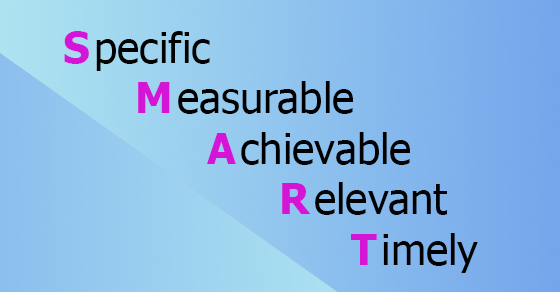
Get SMART when it comes to setting strategic goals


Strategic planning is key to ensuring every company’s long-term viability, and goal setting is an indispensable step toward fulfilling those plans. Unfortunately, businesses often don’t accomplish their overall strategic plans because they’re unable to fully reach the various goals necessary to get there.

If this scenario sounds all too familiar, trace your goals back to their origin. Those that are poorly conceived typically set up a company for failure. One solution is to follow the SMART approach.

Definitions to work by

The SMART system was first introduced to the business world in the early 1980s. Although the acronym’s letters have been associated with different meanings over the years, they’re commonly defined as:

Specific. Goals must be precise. So, if your strategic plan includes growing the business, your goals must then explicitly state how you’ll do so. For each goal, define the “5 Ws” — who, what, where, when and why.

Measurable. Setting goals is of little value if you can’t easily assess your progress toward them. Pair each goal with one or more metrics to measure progress and success. This may mean increasing revenue by a certain percentage, expanding your customer base by winning a certain number of new accounts, or something else.

Achievable. Unrealistically aggressive goals can crush motivation. No one wants to put time and effort into something that’s likely to fail. Ensure your goals can be accomplished, but don’t make them too easy. The best ones are usually somewhat of a stretch but still doable. Rely on your own business experience and the feedback of your trusted managers to find the right balance.

Relevant. Let’s say you identify a goal that you know you can achieve. Before locking it in, ask whether and how it will move your business forward. Again, goals should directly and clearly support your long-term strategic plan. Sometimes companies can be tempted by “low-hanging fruit” — goals that are easy to accomplish but lead nowhere.

Timely. Assign each goal a deadline. Doing so will motivate those involved by creating a sense of urgency. Also, once you’ve established a deadline, work backwards and set periodic milestones to help everyone pace themselves toward the goal.

Eye on the future

Strategic planning, and the goal setting that goes along with it, might seem like a waste of time. But even if your business is thriving now, it’s important to keep an eye on the future. And that means long-term strategic planning that includes SMART goals. Our firm would be happy to explain further and offer other ideas.

© 2018

Hidden liabilities: What’s excluded from the balance sheet?


Financial statements help investors and lenders monitor a company’s performance. However, financial statements may not provide a full picture of financial health. What’s undisclosed could be just as significant as the disclosures. Here’s how a CPA can help stakeholders identify unrecorded items either through external auditing procedures or by conducting agreed upon procedures (AUPs) that target specific accounts.

Start with assets

Revealing undisclosed liabilities and risks begins with assets. For each asset, it’s important to evaluate what could cause the account to diminish. For example, accounts receivable may include bad debts, or inventory may include damaged goods. In addition, some fixed assets may be broken or in desperate need of repairs and maintenance. These items may signal financial distress and affect financial ratios just as much as unreported liabilities do.

Some of these problems may be uncovered by touring the company’s facilities or reviewing asset schedules for slow-moving items. Benchmarking can also help. For example, if receivables are growing much faster than sales, it could be a sign of aging, uncollectible accounts.

Evaluate liabilities

Next, external accountants can assess liabilities to determine whether the amount reported for each item seems accurate and complete. For example, a company may forget to accrue liabilities for salary or vacation time.

Alternatively, management might underreport payables by holding checks for weeks (or months) to make the company appear healthier than it really is. This ploy preserves the checking account while giving the impression that supplier invoices are being paid. It also mismatches revenues and expenses, understates liabilities and artificially enhances profits. Delayed payments can hurt the company’s reputation and cause suppliers to restrict their credit terms.

Identify unrecorded items

Finally, CPAs can investigate what isn’t showing on the balance sheet. Examples include warranties, pending lawsuits, IRS investigations and an underfunded pension. Such risks appear on the balance sheet only when they’re “reasonably estimable” and “more than likely” to be incurred.

These are subjective standards. In-house accounting personnel may claim that liabilities are too unpredictable or remote to warrant disclosure. Footnotes, when available, may shed additional light on the nature and extent of these contingent liabilities.

Need help?

An external audit is your best line of defense against hidden risks and potential liabilities. Or, if funds are limited, an AUP engagement can target specific high-risk accounts or transactions. Contact our experienced CPAs to gain a clearer picture of your company’s financial well-being.

© 2018

Business deductions for meal, vehicle and travel expenses: Document, document, document


Meal, vehicle and travel expenses are common deductions for businesses. But if you don’t properly document these expenses, you could find your deductions denied by the IRS.

A critical requirement

Subject to various rules and limits, business meal (generally 50%), vehicle and travel expenses may be deductible, whether you pay for the expenses directly or reimburse employees for them. Deductibility depends on a variety of factors, but generally the expenses must be “ordinary and necessary” and directly related to the business.

Proper documentation, however, is one of the most critical requirements. And all too often, when the IRS scrutinizes these deductions, taxpayers don’t have the necessary documentation.

What you need to do

Following some simple steps can help ensure you have documentation that will pass muster with the IRS:

Keep receipts or similar documentation. You generally must have receipts, canceled checks or bills that show amounts and dates of business expenses. If you’re deducting vehicle expenses using the standard mileage rate (54.5 cents for 2018), log business miles driven.

Track business purposes. Be sure to record the business purpose of each expense. This is especially important if on the surface an expense could appear to be a personal one. If the business purpose of an expense is clear from the surrounding circumstances, the IRS might not require a written explanation — but it’s probably better to err on the side of caution and document the business purpose anyway.

Require employees to comply. If you reimburse employees for expenses, make sure they provide you with proper documentation. Also be aware that the reimbursements will be treated as taxable compensation to the employee (and subject to income tax and FICA withholding) unless you make them via an “accountable plan.”

Don’t re-create expense logs at year end or when you receive an IRS deficiency notice. Take a moment to record the details in a log or diary at the time of the event or soon after. The IRS considers timely kept records more reliable, plus it’s easier to track expenses as you go than try to re-create a log later. For expense reimbursements, require employees to submit monthly expense reports (which is also generally a requirement for an accountable plan).

Addressing uncertainty

You’ve probably heard that, under the Tax Cuts and Jobs Act, entertainment expenses are no longer deductible. There’s some debate as to whether this includes business meals with actual or prospective clients. Until there’s more certainty on that issue, it’s a good idea to document these expenses. That way you’ll have what you need to deduct them if Congress or the IRS provides clarification that these expenses are indeed still deductible.

For more information about what meal, vehicle and travel expenses are and aren’t deductible — and how to properly document deductible expenses — please contact us.

© 2018

Close-up on the new QBI deduction’s wage limit


The Tax Cuts and Jobs Act (TCJA) provides a valuable new tax break to noncorporate owners of pass-through entities: a deduction for a portion of qualified business income (QBI). The deduction generally applies to income from sole proprietorships, partnerships, S corporations and, typically, limited liability companies (LLCs). It can equal as much as 20% of QBI. But once taxable income exceeds $315,000 for married couples filing jointly or $157,500 for other filers, a wage limit begins to phase in.

Full vs. partial phase-in

When the wage limit is fully phased in, at $415,000 for joint filers and $207,500 for other filers, the QBI deduction generally can’t exceed the greater of the owner’s share of:

  • 50% of the amount of W-2 wages paid to employees during the tax year, or
  • The sum of 25% of W-2 wages plus 2.5% of the cost of qualified business property (QBP).

When the wage limit applies but isn’t yet fully phased in, the amount of the limit is reduced and the final deduction is calculated as follows:

1. The difference between taxable income and the applicable threshold is divided by $100,000 for joint filers or $50,000 for other filers.
2. The resulting percentage is multiplied by the difference between the gross deduction and the fully wage-limited deduction.
3. The result is subtracted from the gross deduction to determine the final deduction.

Some examples

Let’s say Chris and Leslie have taxable income of $600,000. This includes $300,000 of QBI from Chris’s pass-through business, which pays $100,000 in wages and has $200,000 of QBP. The gross deduction would be $60,000 (20% of $300,000), but the wage limit applies in full because the married couple’s taxable income exceeds the $415,000 top of the phase-in range for joint filers. Computing the deduction is fairly straightforward in this situation.

The first option for the wage limit calculation is $50,000 (50% of $100,000). The second option is $30,000 (25% of $100,000 + 2.5% of $200,000). So the wage limit — and the deduction — is $50,000.

What if Chris and Leslie’s taxable income falls within the phase-in range? The calculation is a bit more complicated. Let’s say their taxable income is $400,000. The full wage limit is still $50,000, but only 85% of the full limit applies:

($400,000 taxable income – $315,000 threshold)/$100,000 = 85%

To calculate the amount of their deduction, the couple must first calculate 85% of the difference between the gross deduction of $60,000 and the fully wage-limited deduction of $50,000:

($60,000 – $50,000) × 85% = $8,500

That amount is subtracted from the $60,000 gross deduction for a final deduction of $51,500.

That’s not all

Be aware that another restriction may apply: For income from “specified service businesses,” the QBI deduction is reduced if an owner’s taxable income falls within the applicable income range and eliminated if income exceeds it. Please contact us to learn whether your business is a specified service business or if you have other questions about the QBI deduction.

© 2018

Transitioning to remote audits

Are you comfortable communicating electronically with your auditors? If so, a logical next step might be to transition from on-site audit procedures to a more “remote” approach. Remote audits can help reduce the time and cost of preparing audited financial statements.

21st century audits

Traditionally, audit fieldwork has involved a team of auditors camping out for weeks (or even months) in one of the conference rooms at the headquarters of the company being audited. Now, thanks to technological advances — including cloud storage, smart devices and secure data-sharing platforms — many audit firms are testing the feasibility of remote auditing as a replacement for sending auditors on-site.

In addition to saving time and audit fees, allowing auditors to work remotely improves the work-life balance for auditors and in-house accounting personnel. Your employees won’t need to stay glued to their desks for the duration of the audit, because they can respond to the auditor’s inquiries and document requests remotely.

Best practices

Changing the format of an audit requires flexibility, including a willingness to embrace the technology needed to facilitate the exchange, review and analysis of relevant documents. You can facilitate the transition process by:

Being responsive to electronic requests. Auditors who are out of sight shouldn’t be out of mind. Answer all remote requests from your auditors in a timely manner. If a key employee will be on vacation or out of the office for an extended period, give the audit team the contact information for the key person’s backup.

Giving employees access to the requisite software. Sharing documents with remote auditors may require you to install specific software on employees’ computers. But your company’s policies may prohibit employees from downloading software without approval from the IT department.

Before remote auditors start “fieldwork,” ask for a list of software and platforms that will be used to interact with in-house personnel. Give the appropriate employees access and authorization to share audit-related data from your company’s systems. Work with IT specialists to address any security concerns they may have with sharing data with the remote auditors.

Tracking audit progress. With less face-to-face time with your auditors, you have fewer opportunities to receive updates on the team’s progress. Ask the engagement partner to explain how they’ll track the performance of their remote auditors, and how they plan to communicate the team’s progress to in-house accounting personnel.

Wave of the future

Like remote working arrangements with employees and contractors, remote audits are a growing trend that could potentially reduce the costs of preparing financial statements. But not every audit firm or business is ready to embrace remote auditing. Contact us to discuss ways to make next year’s audit more efficient and cost-effective.

© 2018

Does your business have to begin collecting sales tax on all out-of-state online sales?


You’ve probably heard about the recent U.S. Supreme Court decision allowing state and local governments to impose sales taxes on more out-of-state online sales. The ruling in South Dakota v. Wayfair, Inc. is welcome news for brick-and-mortar retailers, who felt previous rulings gave an unfair advantage to their online competitors. And state and local governments are pleased to potentially be able to collect more sales tax.

But for businesses with out-of-state online sales that haven’t had to collect sales tax from out-of-state customers in the past, the decision brings many questions and concerns.

What the requirements used to be

Even before Wayfair, a state could require an out-of-state business to collect sales tax from its residents on online sales if the business had a “substantial nexus” — or connection — with the state. The nexus requirement is part of the Commerce Clause of the U.S. Constitution.

Previous Supreme Court rulings had found that a physical presence in a state (such as retail outlets, employees or property) was necessary to establish substantial nexus. As a result, some online retailers have already been collecting tax from out-of-state customers, while others have not had to.

What has changed

In Wayfair, South Dakota had enacted a law requiring out-of-state retailers that made at least 200 sales or sales totaling at least $100,000 in the state to collect and remit sales tax. The Supreme Court found that the physical presence rule is “unsound and incorrect,” and that the South Dakota tax satisfies the substantial nexus requirement.

The Court said that the physical presence rule puts businesses with a physical presence at a competitive disadvantage compared with remote sellers that needn’t charge customers for taxes.

In addition, the Court found that the physical presence rule treats sellers differently for arbitrary reasons. A business with a few items of inventory in a small warehouse in a state is subject to sales tax on all of its sales in the state, while a business with a pervasive online presence but no physical presence isn’t subject to the same tax for the sales of the same items.

What the decision means

Wayfair doesn’t necessarily mean that you must immediately begin collecting sales tax on online sales to all of your out-of-state customers. You’ll be required to collect such taxes only if the particular state requires it. Some states already have laws on the books similar to South Dakota’s, but many states will need to revise or enact legislation.

Also keep in mind that the substantial nexus requirement isn’t the only principle in the Commerce Clause doctrine that can invalidate a state tax. The others weren’t argued in Wayfair, but the Court observed that South Dakota’s tax system included several features that seem designed to prevent discrimination against or undue burdens on interstate commerce, such as a prohibition against retroactive application and a safe harbor for taxpayers who do only limited business in the state.

Please contact us with any questions you have about sales tax collection requirements.

© 2018